
A full house rewire is one of the most significant electrical investments a homeowner can make but it is also one of the most important. Whether you are renovating an older property, preparing to sell, or experiencing signs of failing wiring, understanding the cost of a house rewire in the UKhelps you budget accurately and avoid costly surprises down the line.
In this 2026 guide, the team at KFord Electrical Services – trusted NICEIC-registered electricians serving Kingswinford and across the West Midlands, break down everything you need to know: real costs, what drives them up or down, timelines, and when to act.
What Is a Full House Rewire?
A full house rewire involves replacing all of a property’s electrical wiring, sockets, switches, and, in most cases, the consumer unit (also known as the fuse box). The goal is to bring the installation up to current UK wiring regulations — specifically BS 7671, the IET Wiring Regulations — ensuring your home can safely handle modern electrical demand.
Most properties built more than 25–30 years ago that have not been updated will benefit from rewiring. This is especially true of homes with original rubber or fabric wiring, which degrades over time and poses a genuine fire and shock risk.
Not sure whether your property needs a full rewire or just a consumer unit upgrade? Our team is happy to carry out an Electrical Installation Condition Report (EICR)to assess your home’s current condition and advise on the most cost-effective route forward.
Average House Rewire Costs in the UK (2026)
The table below provides a general pricing guide based on property size. These are indicative figures; your final quote will depend on a number of factors covered further below.
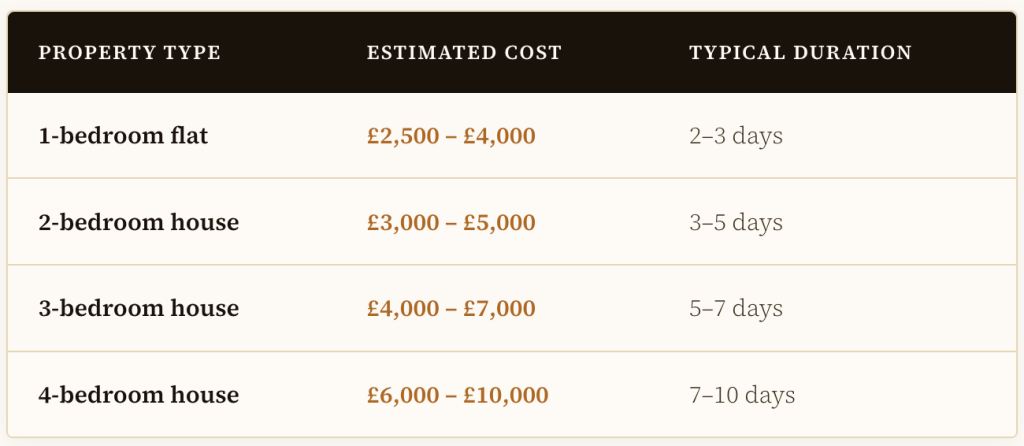
Please note: These prices are estimates based on standard UK market rates in 2026. Final costs vary by region, property condition, and scope of work. Contact KFord Electrical for a free, no-obligation quote specific to your property.
What Affects the Cost of a House Rewire?
No two rewires are the same. Here are the key factors that will influence your final price:
1. Property Size and Number of Circuits
The bigger your home, the more cable, fittings, and labour hours are required. A larger property also means more circuits to run and test, which adds to overall costs.
2. Accessibility of Walls and Floors
If a property has solid walls, concrete floors, or restricted loft access, electricians will need more time to run cables, increasing labour costs. Properties with timber frames or accessible voids are generally quicker and cheaper to rewire.
3. Occupied vs. Empty Property
Rewiring an empty property is significantly more efficient. When a home is occupied, work must be staged to minimise disruption, which can extend the timeline and increase costs. We always advise clients to consider temporary alternative accommodation if possible.
4. Condition of Existing Wiring
Older wiring types such as lead-sheathed, rubber-insulated, or aluminium wiring require more careful removal and may reveal additional issues behind walls. This can extend both the timeline and the budget.
5. Consumer Unit Upgrade
In most rewires, a new consumer unit (fuse board) will be required. At KFord, we install only the latest 18th Edition consumer units, fitted with surge protection devices and individual RCBO protection on every circuit.
6. Plastering and Remedial Repairs
Chasing walls to run new cables causes some surface damage. KFord Electrical offers an in-house plastering service to restore your walls after rewiring saving you the hassle of finding a separate tradesperson.
7. Additional Sockets, Lighting, or Smart Features
If you want extra sockets, USB outlets, outdoor power points, or smart home wiring, the rewire stage is the ideal time to add these. Costs vary depending on the scale of additions.
Signs Your Home May Need Rewiring
If your property was built more than 25 years ago and has not had significant electrical work since, there is a good chance the wiring is due for renewal. Look out for these warning signs:
- Lights that frequently flicker or dim without explanation
- A fuse box or circuit breaker that trips repeatedly
- Burning smells or scorch marks around sockets, switches, or the fuse board
- Sockets or switches that feel warm to the touch
- Visible old fabric-covered or rubber wiring (often found in lofts or under floorboards)
- A lack of earthing on older metal light switches or sockets
- Very few sockets per room, requiring frequent use of extension leads
- Round-pin plug sockets anywhere in the property – a clear sign of very old wiring
⚠️ Important: Faulty or degraded wiring is one of the leading causes of house fires in the UK. If you notice any of the above, arrange a professional EICR inspection without delay. You can also visit Electrical Safety First for independent guidance on home electrical safety.
How Long Does a House Rewire Take?
Timelines vary depending on property size, complexity, and whether plastering is needed afterwards:

These timescales assume a reasonably accessible property. Solid wall constructions, listed buildings, or properties with complex layouts may take longer. Our team will give you a realistic timeline as part of your free quote.
Can You Live in the House During a Rewire?
Technically yes, but in most cases, we strongly advise against it. A full rewire involves lifting floorboards, chasing walls, and temporary power shutdowns throughout the day. Living in the property during this period is disruptive, dusty, and potentially unsafe in certain areas.
For smaller properties or partial rewires, it may be more manageable. However, for a full rewire, particularly in a family home arranging temporary accommodation for the duration of the work will save considerable stress and may allow the job to be completed faster and at lower overall cost.
Does a House Rewire Add Value to Your Property?
Yes and in multiple ways. Modern wiring and a compliant consumer unit make your home more attractive to buyers, lenders, and insurers alike.
- More appealing to buyers and mortgage lenders – many lenders require an up-to-date EICR before approving a mortgage on an older property
- Safer and less likely to experience faults or fires
- Fully compliant with current UK regulations
- Ready for future technology – EV charging, smart home systems, and solar panels
If you are planning to sell, a recent EICR and evidence of a rewire can be a genuine selling point and may help you avoid price reductions during conveyancing.
Should You Combine a Rewire With Other Renovation Work?
Absolutely and it makes strong financial sense. If you are planning a kitchen upgrade, bathroom renovation, loft conversion, or extension, scheduling your rewire at the same time avoids the need to redecorate or re-plaster twice.
KFord Electrical also installs outdoor electrical supplies, EV chargers, and media walls. If you are planning any of these alongside your rewire, we can incorporate them into a single efficient programme of work.
Choosing the Right Electrician for Your Rewire
A rewire is not a job for an unqualified tradesperson. Poor electrical work can be dangerous, will not comply with UK regulations, and can invalidate your home insurance. When choosing an electrician, look for:
- NICEIC registration — the UK’s leading electrical safety body. NICEIC-approved contractors are regularly assessed and must meet rigorous competence standards. Search the NICEIC register here.
- Full public liability insurance so you are protected if anything goes wrong
- Transparent, written quotes — any reputable electrician will provide a clear, itemised quote before work begins
- Verifiable reviews — check independent platforms such as Checkatrade for real customer feedback
- Electrical Installation Certificate (EIC) on completion — all notifiable electrical work in the UK must be certified
KFord Electrical Services is a NICEIC-registered, family-run business with over 15 years of experience serving homeowners across Kingswinford, Dudley, Wolverhampton, Walsall, Stourbridge, and the wider West Midlands. Every rewire we carry out is fully certified and backed by a 12-month parts and labour guarantee plus the NICEIC 6-Year Platinum Promise.
Final Thoughts: Is a House Rewire Worth the Investment?
Without question. A full house rewire is one of the most important safety investments you can make. Outdated wiring is a hidden hazard, you may not notice the signs until something goes wrong. Acting early is always less expensive and less disruptive than responding to an emergency.
Beyond safety, modern wiring adds measurable value, improves efficiency, and future-proofs your home for the demands of electric vehicles, smart technology, and renewable energy systems.
If you are based in the West Midlands and would like honest, straightforward advice about your home’s electrical installation, contact KFord Electrical Services today for a free, no-obligation quote. Call us on 07725 002 381 or reach us via WhatsApp — we are always happy to help.